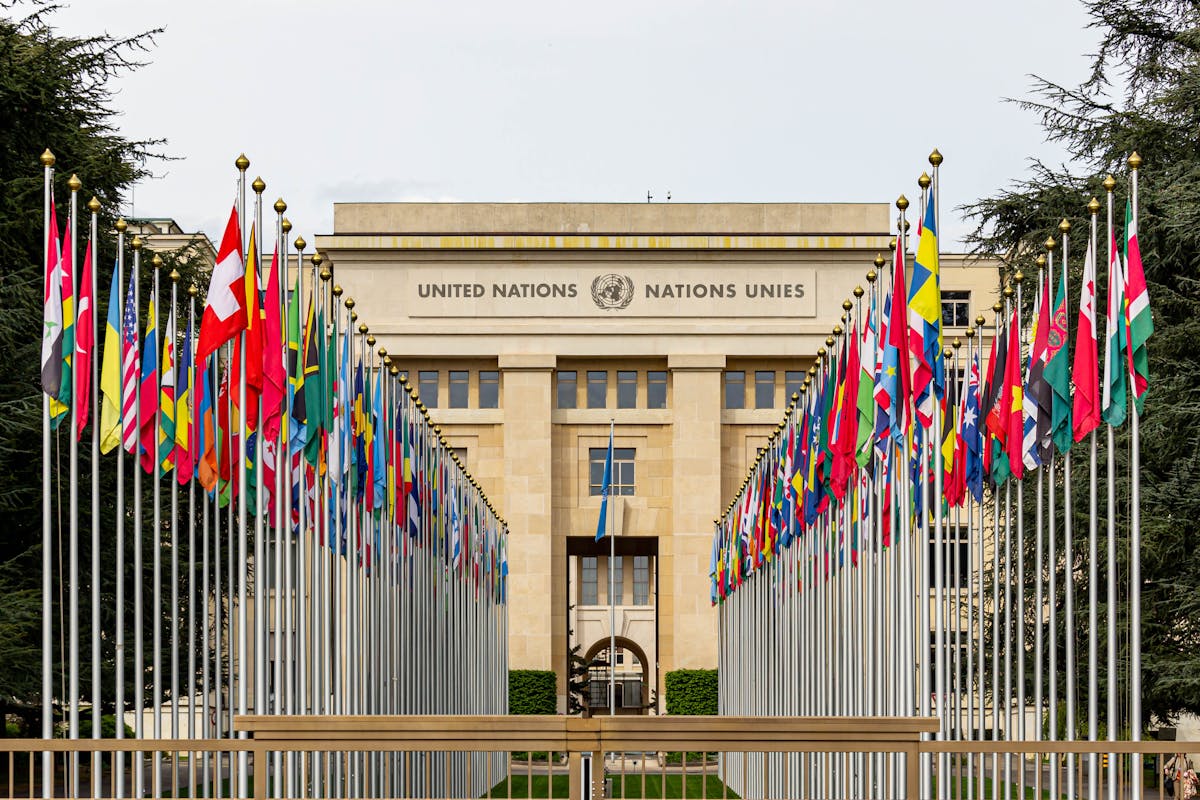
In his final address to the United Nations General Assembly, Secretary-General Antonio Guterres told world leaders that authority is increasingly concentrated in "data, computing capacity and algorithms, advancing faster than humanity's capacity to govern it." He framed unchecked artificial intelligence as one of four defining tests of power facing the world, placing it alongside war, inequality and climate change as issues he said will define whether multilateral institutions remain relevant.
Guterres was direct about where he places the blame for AI's risks: "the danger is not technology, the danger is technology without accountability," he said, rejecting the framing that AI itself is the problem in favour of one centred on the absence of governance around it. He renewed his long-standing call to prohibit lethal autonomous weapons outright, telling delegates "killer robots must have no place in our future," a line he has used in prior addresses but repeated here with the added weight of a farewell speech.
Beyond weapons, Guterres pressed member states to build a multilateral AI risk management framework backed by independent oversight, explicitly including protections meant to stop children from becoming, in effect, test subjects for unregulated systems deployed without adequate safety review. The call lands at a moment when several major AI labs are shipping increasingly capable models on compressed timelines, and comes just as Guterres's own successor as UN General Assembly president has begun signalling a similar emphasis on AI guardrails without political overreach — suggesting the institution's leadership is trying to hand off this particular fight rather than let it lapse with his departure.